
Advancing ICM - the power of Imprint
Preserving Essence Within Motion
If ICM is about movement, then what happens when we choose not to move, if only for a moment? It’s within that pause that a new layer of expression begins to emerge.
‘Imprint’ is not a term I invented, but one I’ve adopted as it best describes the process involved. Since discovering this technique several years ago, it has become a cornerstone of my approach to ICM.
Understand this concept, and the level of your ICM photography can be significantly elevated.
I define an imprint as a moment during an ICM exposure where the camera is held still.
This brief pause effectively “imprints” the essence of the scene onto the sensor. When combined with intentional movement, it produces a more nuanced result. Unlike traditional ICM - where motion is typically continuous - imprinting allows a sense of character to be retained within the abstraction.
This is a process I’ve explored before (see The Power of Imprints), and it feels essential to include it here as part of this series.
In many ways, imprinting sits between two worlds. It’s a hybrid approach, balancing the abstraction of ICM with the clarity of standard photography. The outcome is controlled by the relationship between stillness and movement—how long the camera is held steady, and how it is moved throughout the remainder of the exposure.
The action can be best understood through example.
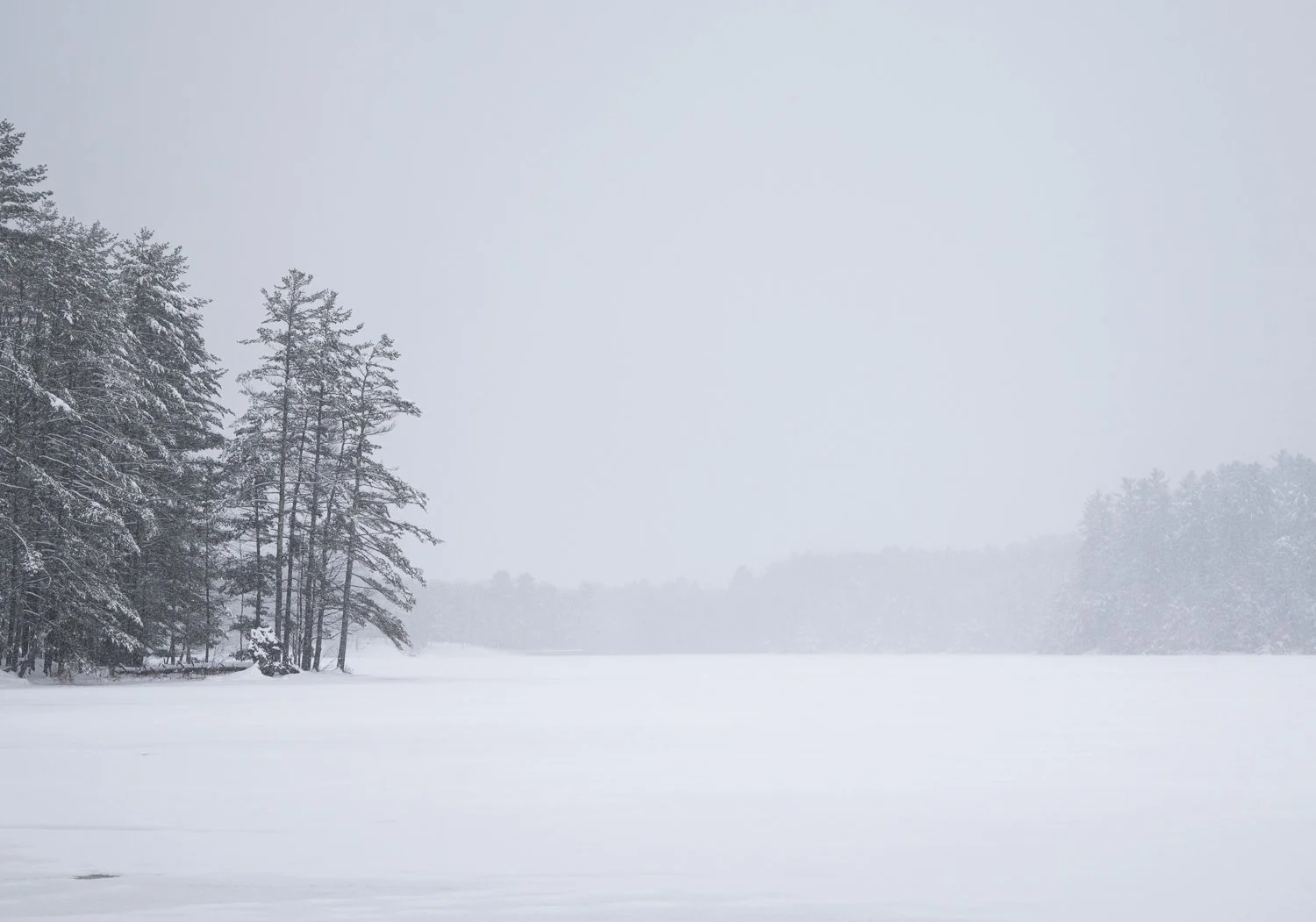
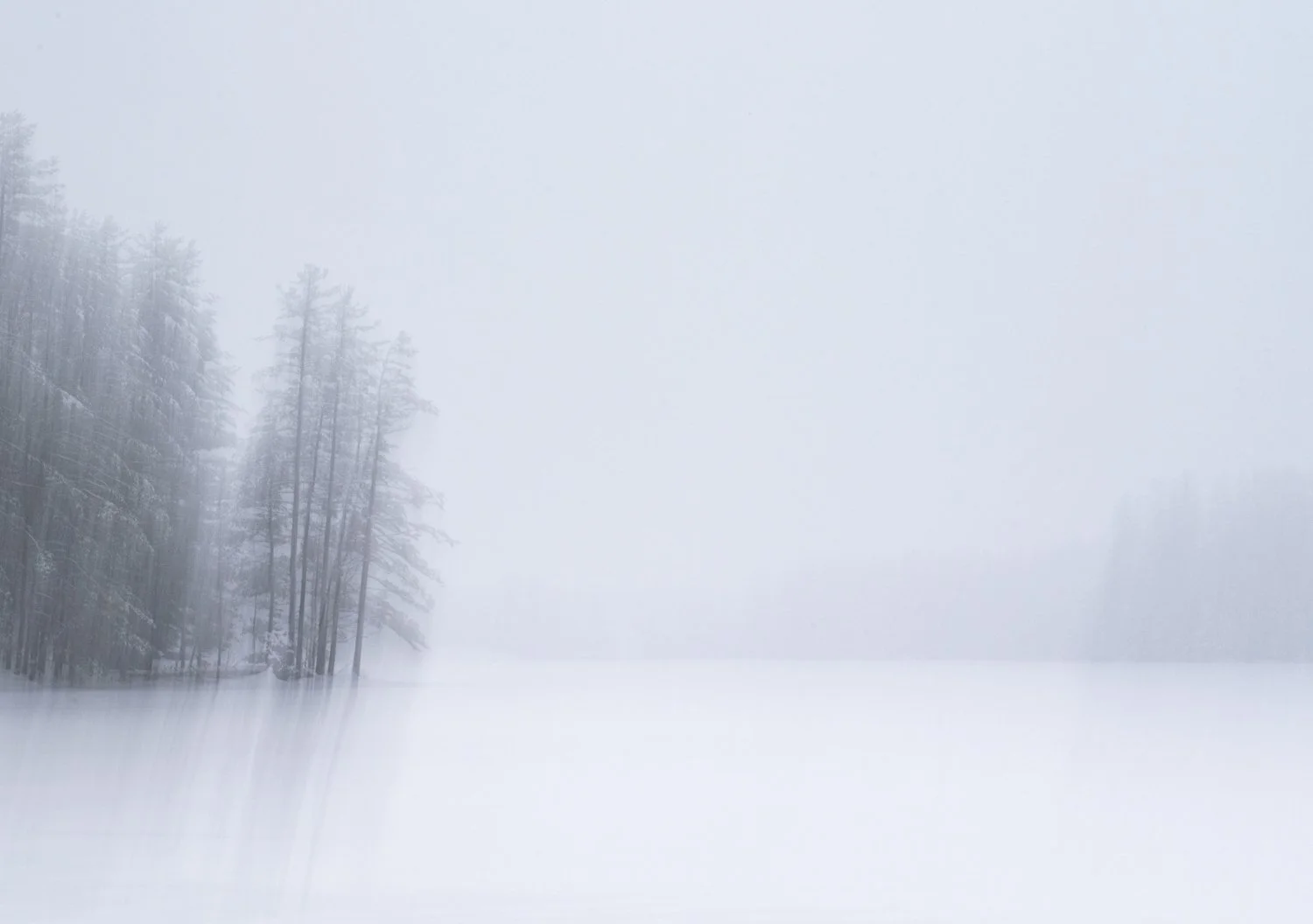
The series below presents a single scene captured in three ways: standard photography, traditional ICM, and imprint-based ICM. Onsite conditions were very atmospheric, with soft falling snow muting both sound and visibility.
The first image, captured using standard techniques, reflects the scene as expected - highlighting strong pine trees set against a subdued background. While effective, it lacks the quiet, serene atmosphere that was experienced in the moment.
The second image applies traditional ICM techniques. By following the vertical lines of the trunks their form is emphasized, but much of the scene’s character and atmosphere is lost in the process.
The final image demonstrates the impact of imprinting. Here, the camera is held still briefly at the start of the exposure before introducing movement. This allows the essence of the landscape to be preserved, while enhancing the atmosphere and introducing a more refined level of abstraction.
The preference between these approaches will always remain subjective, but this comparison highlights the creative potential that imprinting can bring.

A review - the impact of camera direction
In an earlier episode I highlighted the fact that the effect of camera movement can often be seen in ICM images in what I refer to as tails. Tails are the areas of contrast that are dragged through an image and a reflection of camera movement'.
I also indicated that the orientation of camera movement (eg upward versus downward) needs to be considered. The choice of camera direction can reflect heavily in the outcome of the imprint technique.
The imprinted ICM image presented above provides a perfect demonstration of that. The areas of contrast below the trees may at initial glance be considered shadows, but this is actually the impact of the (upward) camera movement, bringing down the lines of contrast as we drag the trees through the frame
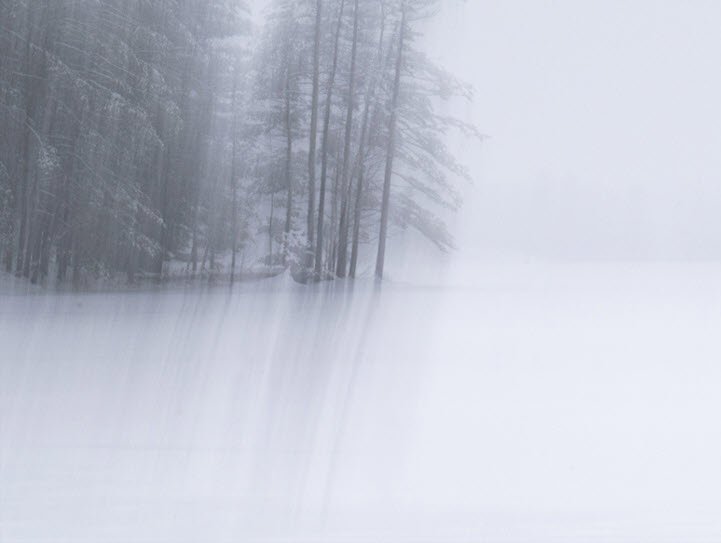
The lines extending from the base of the trees are not shadows, but are the ‘tails’ resulting from camera movement
These tails might not have been noticed as they are subtle, but I’d like to offer another, and perhaps more telling reason for them to have been overlooked.
In scenes of this nature our eyes readily accept tails such as this as shadows, or perhaps even reflections. In essence, we see these as occurring naturally in this context, and not out of place.
Now consider what the effect might have been had the camera move in the opposite, or downward direction. This would have resulted in the top of the trees being extended to some degree, resulting in tails encroaching into the sky. This would provide a result that is less natural to the eye, with a sense of harmony replaced by one of tension.
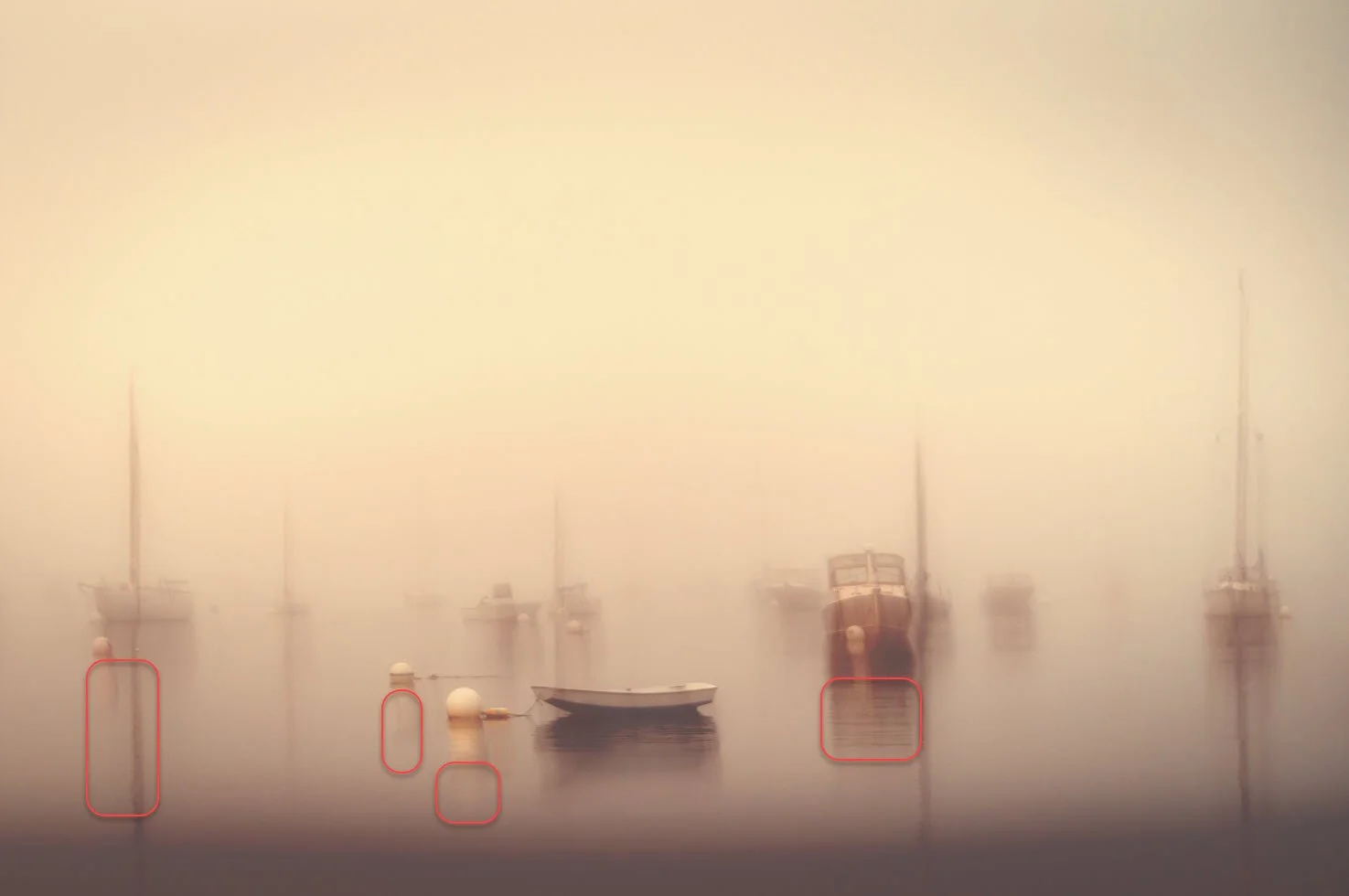
The following image provides another example where the camera motion works in harmony with nature. In this instance the camera was moved in an upward direction after the initial imprint had been recorded. This resulted in content being dragged down through the frame, in the opposite direction to the camera movement.
The result of this is an overall softening of the image and an increased sense of atmosphere
Subtle evidence of the camera motion is again evidenced by the extended reflections in the water. Once again these tails may be overlooked as they work together with the natural characteristics of the image.
The second image highlights these tails. Had the camera been moved in a downward direction during exposure these tails would have then extended up through the image - no longer having the natural appearance of reflections but shapes incongruous to the natural scene. This applies equally to all other camera directions, all of which would oppose the idyllic nature of the harbor scene.

Final Words
Imprinting may not always be considered a technique in its own right, but rather a refinement of others. Since discovering its advantages, it has found its way into almost every ICM photograph I take and often applied at a subconscious level.
For me, imprinting is a difference-maker, adding a subtle layer of control and refinement to my images.
I’ll leave you with a selection of further examples to explore. As you view them, ask yourself: what might each image look like without imprinting? The direction of camera movement may be less obvious, but the process of reading it in itself becomes a worthwhile exercise - one that can deepen your understanding.
I’d be interested to hear whether this is something you can see yourself incorporating into your own ICM workflow - or, if you’re already using it, what your experience has been.
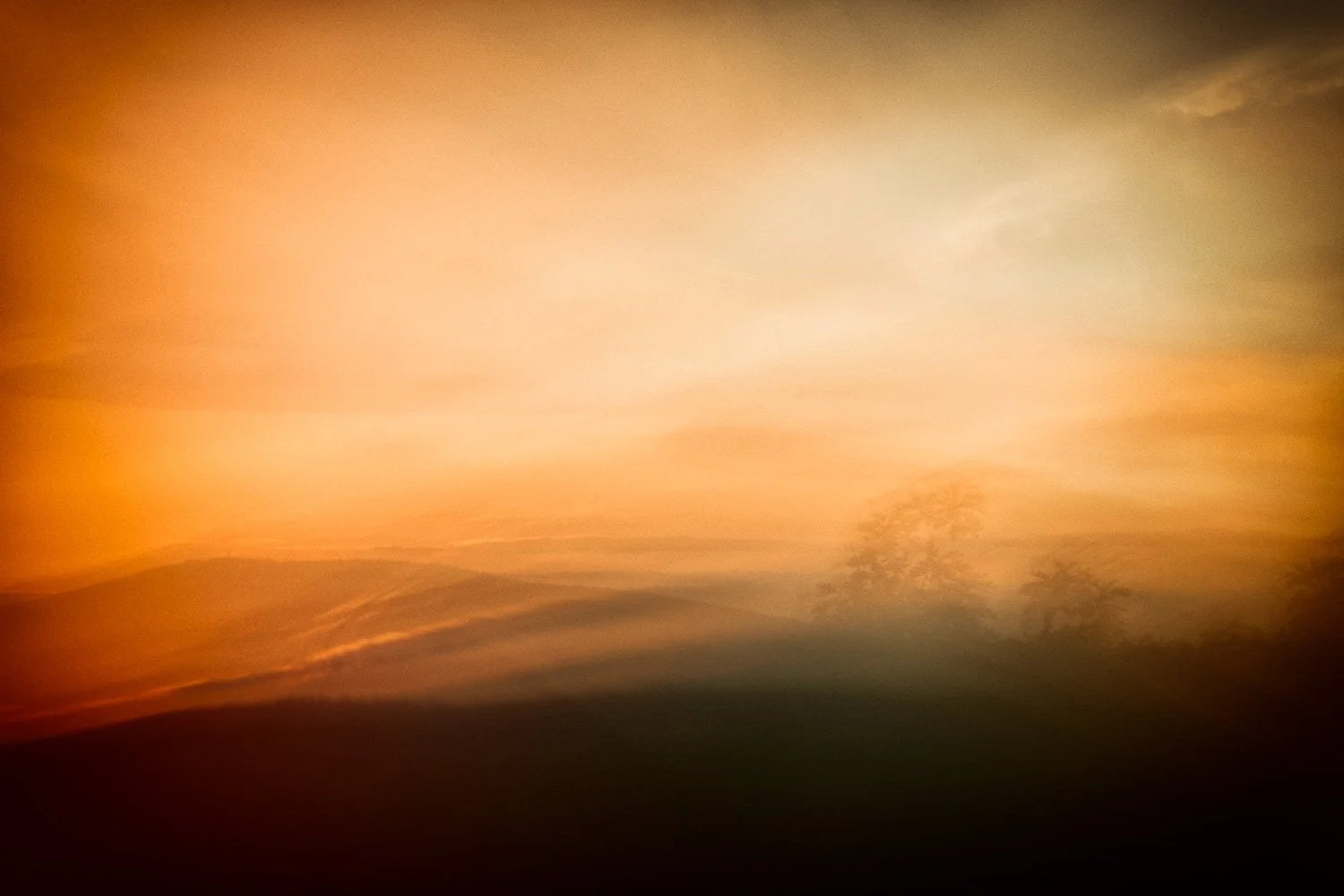




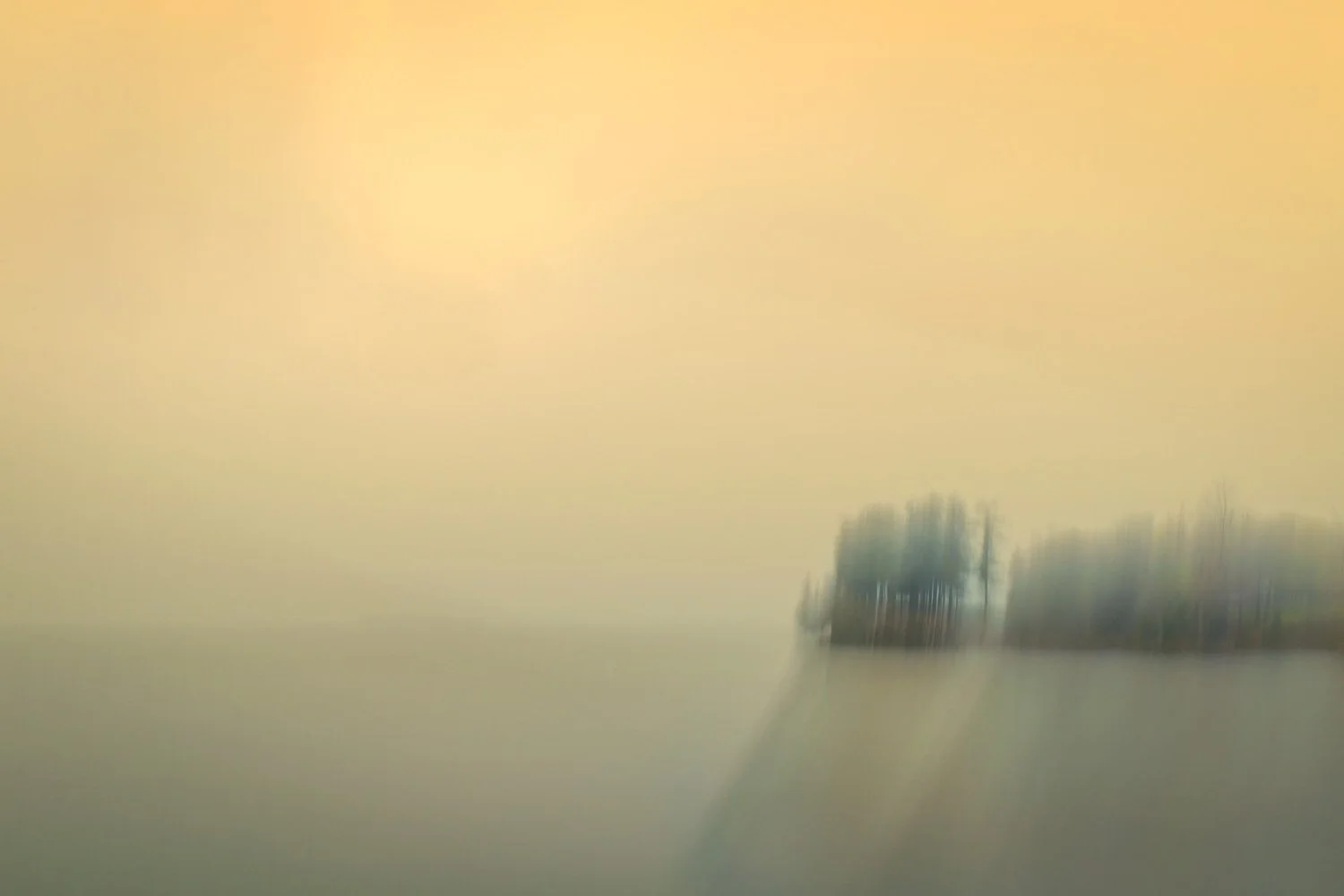
Each image has benefitted by the use of the IMPRINTING technique - how might they have looked without?