
ICM unlocked - key considerations that lead to success
Intentional Camera Movement (ICM) photography is one of the most expressive, and unpredictable, approaches to image-making. While the results can often feel abstract or even accidental, there are key considerations that influence how successful an image becomes.
In this article, I explore those considerations, drawing on my own experience to better understand how subject, movement, and intent come together. The aim is not to remove unpredictability, but to develop a level of awareness that allows for more consistent and meaningful results.
Key Considerations
Seeing with emotion vs evaluation
This first point is perhaps more philosophical than technical, but it marked a turning point in my own approach, and I think worthwhile to mention.
Like many abstract art forms, ICM asks us to step away from pure analysis and instead respond to what an image makes us feel. For me, a simple shift in mindset - pausing to ask what do I feel when I first see this? - has led to a deeper appreciation of both my own work and the work of others.
It’s a small but meaningful exercise: allowing that initial emotional response to exist before the analytical mind takes over.
I often think of this in the context of walking into a gallery. You’re drawn to a piece almost instinctively. Your first reaction is rarely technical - it’s simply “I like that”. That first response is immediate, honest, and free from judgement, and I feel it helps our appreciation if we look at all abstract work in a similar manner.
An approach of demoting the analytical brain in favor of emotion may not work with everyone, but it’s worth experimenting with and may change how you experience photography as a whole.
Identifying lines of contrast
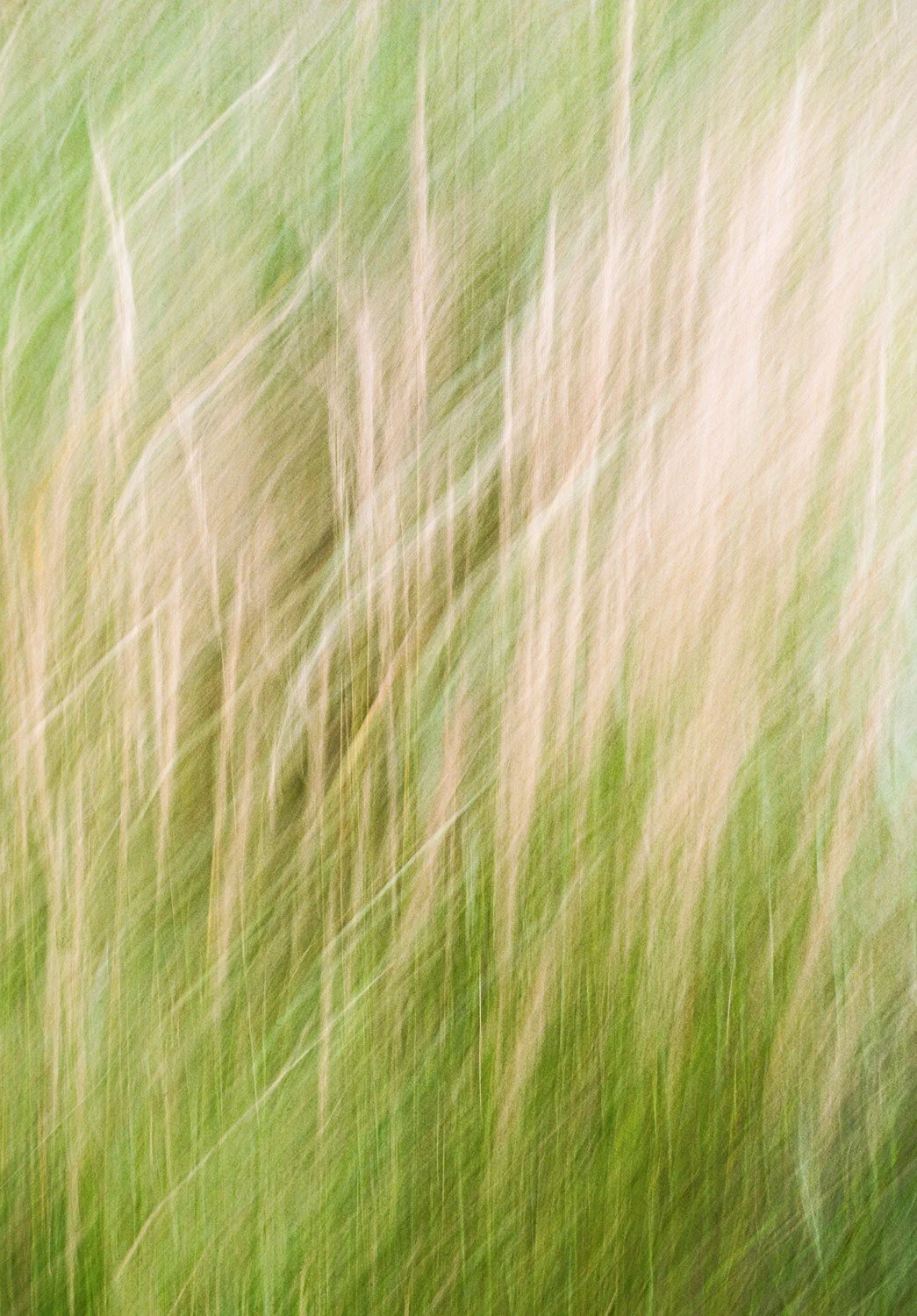
A choice to not follow lines of contrast has led to a more impressionistic view of these ornamental grasses
We’ve already touched on how following lines of contrast with camera movement can help preserve a sense of form within an image.
Because ICM inherently involves a departure from fine detail, the role of contrast, whether tonal or color-based, becomes critically important to the overall feel of the photograph. In many ways, contrast becomes the structure that replaces detail.
By aligning camera movement with the primary lines of contrast in a scene, we can retain visual cues that hints at the original subject. In this case detail is replaced by form.
In contrast, movements that cut across or ignore these lines tend to push the image further into abstraction, with emotion and suggestion taking precedence over recognition.
Neither approach is inherently better - the outcome is entirely an artistic choice.
However, for those new to ICM, there is often greater satisfaction in images where some sense of structure remains. Following lines of contrast offers a balance between abstraction and familiarity.
The key takeaway here;
“Aligning movement with dominant contrast lines will produce more predictable results.”
The real challenge to many, is learning to see those lines of contrast in the first place.
Shutter Speed
Shutter speed is arguably the most important setting in ICM photography.
Too fast, and the result can resemble little more than unintended camera shake. Too slow, and any sense of subject or form can dissolve into an indistinct wash of blur. Small adjustments in shutter speed can produce surprisingly significant differences, making it a critical factor in shaping the final image.
However, shutter speed is only one part of the equation.
We also need to consider the speed at which the camera is moving during the exposure. A fast camera movement at a relatively short shutter speed can produce a similar level of blur to a slower movement combined with a longer exposure. In other words, the visual outcome is not determined by shutter speed alone, but by the relationship between shutter speed and motion.
This leads to an important concept:
The amount of blur in an image is directly related to the distance the camera moves during the exposure.
Understanding this helps explain why results can sometimes feel inconsistent, even when using the same settings.
For this reason, I would strongly recommend working towards consistency in your camera movement. By keeping camera movement speed consistent (something we’ll touch on further in the next section), you effectively remove one variable from the process, allowing shutter speed to become a more predictable control.
Camera Motion Control
This may be a point of debate, but I’ve found that engaging the core of the body leads to far more controlled and fluid results.
For me, this means anchoring the camera against the forehead, with elbows tucked into the sides for stability. From there, movement is driven by the body rather than the arms - bending forward or backward to create vertical motion, and rotating through the torso for horizontal movement. This approach produces smoother, more consistent motion, which in turn leads to more predictable results.
In contrast, shooting with the camera held at arm’s length introduces a greater degree of variability. That lack of constraint can be beneficial when aiming for more random or expressive outcomes, but it often comes at the expense of control.
This isn’t to say one approach is right or wrong - it really boils down to a personal preference
However, for those struggling with fluidity in their images, this idea of tighter camera control is worth exploring.
Lens Length
There are no hard and fast rules when it comes to lens choice in ICM. In most cases, it simply comes down to selecting a focal length that best frames your subject and suits your intended composition.
However, there is one important characteristic worth keeping in mind:
longer lenses amplify camera movement
While this may seem obvious once stated, it has a direct impact on how your images are rendered. At longer focal lengths, even small movements of the camera become exaggerated within the frame, often resulting in more pronounced blur and less margin for error. Conversely, wider lenses tend to produce a more forgiving effect, with movement appearing less intense and easier to control.
This ties closely back to both shutter speed and camera movement. A motion that feels subtle at a wide focal length may become overly aggressive when using a telephoto lens, requiring you to adjust either your movement, your shutter speed, or both.
In practice, these adjustments tend to become intuitive as you shoot, so it’s not something to be overly concerned about. Rather, it’s simply another variable to be aware of, one that can be used creatively once understood.
Direction of Motion
This is a topic that is often overlooked in ICM instructional guides, yet one that can significantly influence the final image.
When I refer to direction in this context, I’m not simply talking about the angle of movement, but the orientation of that movement. That is whether the camera is moving upward or downward in a vertical motion, or left to right versus right to left in a horizontal one.
The effect on an ICM image can sometimes be subtle, but in certain situations it has a profound impact on how the photograph is subconsciously perceived by the viewer. This becomes easier to understand when looking at more extreme examples.
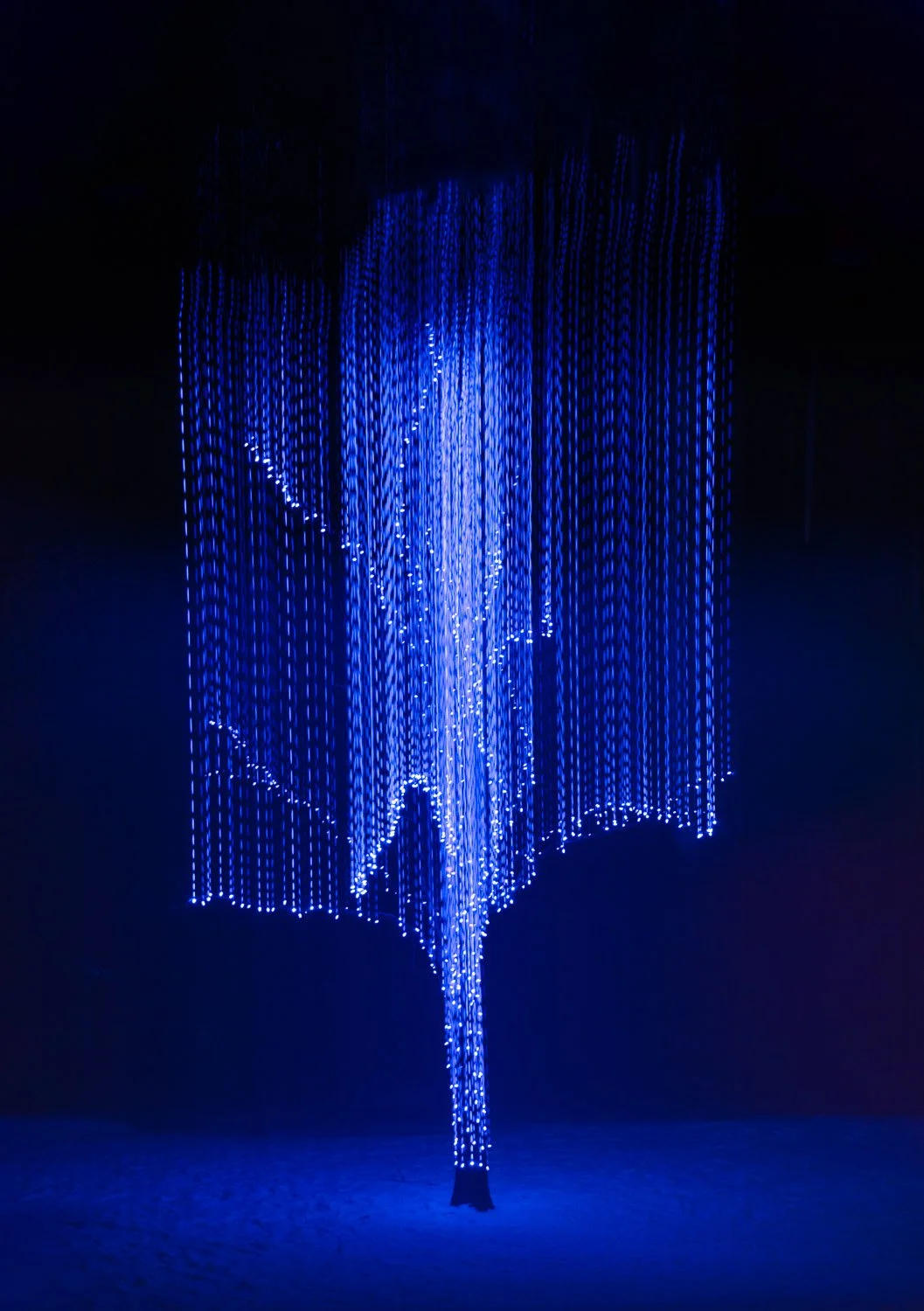
Consider a scenes below. Both are of the same tree, taken on a winter’s night and adorned with lights for the holiday season. To help in describing the impact I’m going to introduce you to another term I use, that being ‘tails’.
What I am calling tails here are the streaking effects caused by camera movement (in this case the trails of lights), and much like a tail follows the dog the ‘tails’ in ICM follow the direction of motion. Understanding this concept is not only helpful when selecting your own camera motions but can provide visual clues on how the camera was moved on others.

This leads to an important point:
image content is dragged through the frame in the opposite direction to the camera movement.
When the camera moves upward, the image content is dragged downward through the frame.
This is clearly visible in the first image, where the trails created by the lights appear to fall as the camera moves up. Conversely, in the second image, where the camera is moved downward, the opposite effect occurs:
Before we move on, it may be tempting to assume that the longer tails in the second image are the result of a slower shutter speed. This is not the case. Both images were taken at a similar shutter speed of around ½ second, with the difference arising from a variation in the speed of camera movement, as discussed earlier.
Returning to the subject of direction, and why I feel these “tails” matter. If I were to ask which of the two images is most appealing, the response would likely be mixed. That split in opinion is telling; it highlights a genuine difference in visual impact.
Personally, I’m drawn to the first image. The downward tails feel more natural to my eye, whereas the second image leans further into abstraction. Depending on the contentof the photograph, this subtle distinction can be important.
This is where the nuance begins to emerge. As you continue exploring ICM, you may find that these directional cues play a subtle but important role. Tails can either reinforce the natural feel of an image, or introduce a sense of tension by working against what the viewer instinctively expects. This sense of harmony versus tension will be explored further as we build on our understanding.
The expanding frame
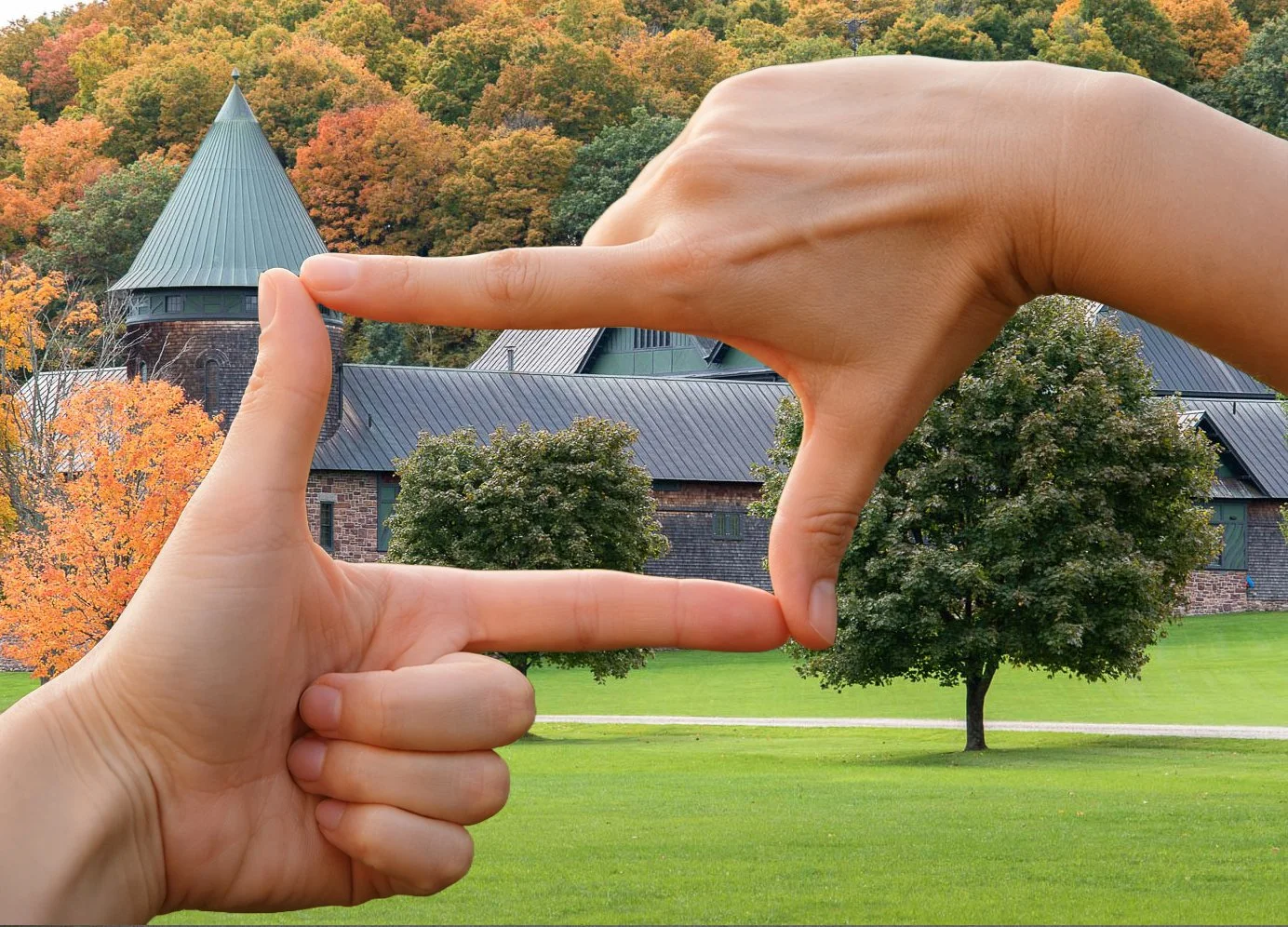
A simple framing mechanism can help visualize the effect of camera movement
Another concept worth understanding is what I refer to as the Expanding Frame.
In traditional photography, what we see through the viewfinder closely represents what will be captured in the final image. With ICM, this relationship changes. What we capture is not just what is in front of the lens at the moment the shutter is released, but also what enters the frame as the camera moves during the exposure.
In other words, the final image is made up of two elements:
what is initially within the frame, plus what lies ahead of the camera in the direction of movement.
This idea can be demonstrated very simply. By creating a frame with your thumbs and index fingers, you can observe how moving that frame in any direction introduces new visual information. Elements that were originally outside the frame are gradually brought into view as the frame shifts.
The same principle applies to the camera. As it moves, the frame effectively expands, incorporating additional parts of the scene that were not present at the start of the exposure.
Incidentally, this framing with the hands is also a great way to visualize the effect of camera direction (ie dragging content through the frame) as discussed previously.
Final thoughts
ICM sits in an unusual space within photography; one that blends technical control with a willingness to let go.
The concepts explored here are not rules to be followed rigidly, but tools to help guide your intent. Each one offers a way to bring a little more predictability to a process that can often feel random and complex.
At the same time, it’s important not to lose sight of the very thing that makes ICM so compelling. The unpredictability, the subtle variations, and even the frequent failures are all part of the process. In many ways, they are the process.
What begins as an attempt to control movement often evolves into something more intuitive, that being a balance between deliberate action and instinctive response.
Now that we have covered so of the key elements that can make your ICM experiences more controlled and predictable, in our next episode we’ll discuss some of the ICM-specific challenges you may have to overcome.
For other episodes in this continuing series be sure to visit the ‘evolving approaches’ page under the ICM guides tab.