
Has photography come full circle?
It is well known that my own passion for photography lies in Intentional Camera Movement (ICM) and the exploration of more abstract techniques. This represents a shift away from traditional approaches that often demand technical perfection, and in recent years I can’t help but draw a parallel between this movement and the very early days of photography.
In the early 1900s, photographers around the world were engaged in a struggle to have photography recognised as an art form in its own right. In the United States, this shift was led by Alfred Stieglitz and his Photo-Secession movement, and became closely associated with the era of pictorialism. Photographers of this time favored suggestion, mood, and atmosphere over strict realism and detail.
Prior to this, photography had largely been viewed as a representational or documentary medium, focused on capturing clarity and realism. And who could blame them? Early photographers were working with extremely slow emulsions that required long exposure times, making the pursuit of sharpness and technical precision a significant challenge in itself.
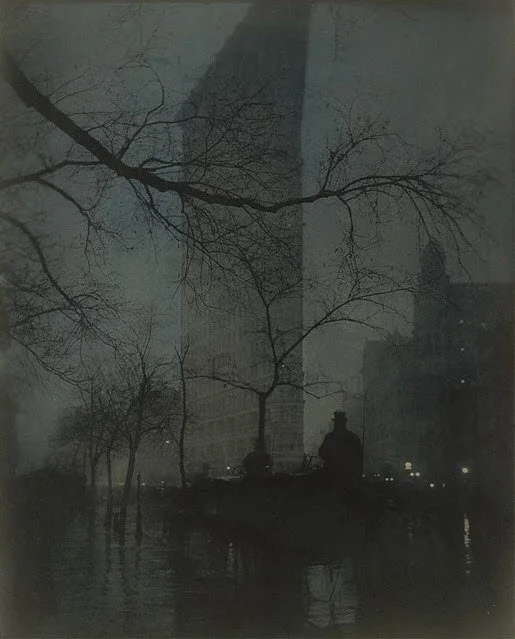
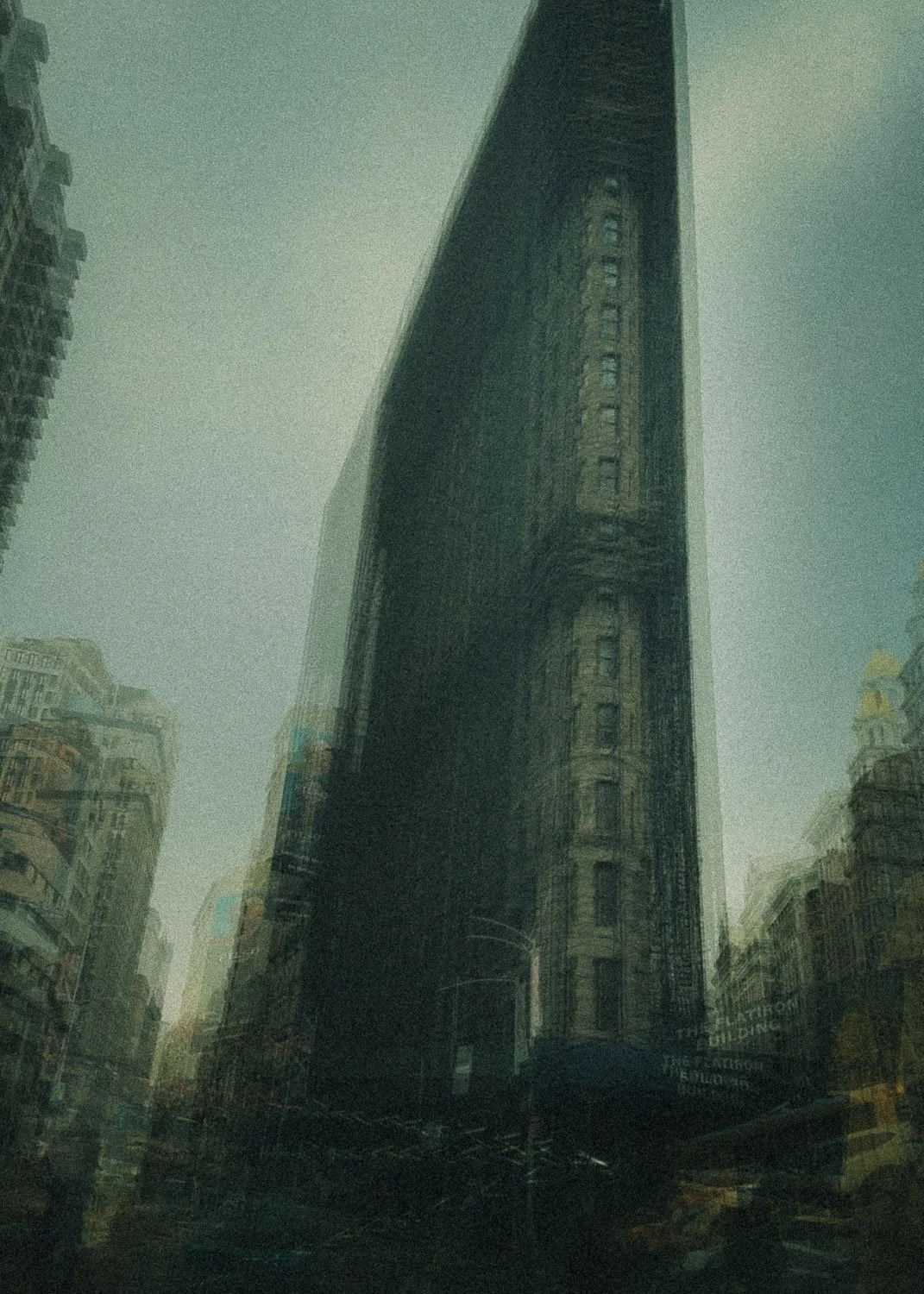
Edward Steichen’s 1904 Flatiron building and a modern-day equivalent
Fast forward to the digital age and we appear to be moving through a similar cycle. Advances in camera design and processing software now allow photographers to produce images with astonishing levels of detail. Crisp lenses, high-resolution sensors, and powerful algorithms all contribute to photographs of remarkable technical perfection.
Yet many photographers are now moving away from this pursuit of ultimate sharpness, searching instead for new avenues of creative expression. Some are returning to film photography for the different perspective it offers, while others explore techniques such as ICM or soft focus methods that introduce a greater sense of interpretation and artistic freedom.
Interestingly, echoes of these ideas can even be found in the pictorialist era. Edward Steichen, for example, was reported to experiment with shaking his tripod during exposure to create a softer, more atmospheric image. One might even wonder whether this could be considered one of the earliest recorded gestures toward what we now recognise as intentional camera movement.
In many ways, what we are seeing today feels reminiscent of the pictorialist movement: a shift away from the relentless pursuit of technical perfection toward images that embrace mood, atmosphere, and perhaps even a degree of imperfection.
Perhaps photography has indeed come full circle.
I would be interested to hear what others think of this idea - and thoughts on what the next creative trend in photography might be.